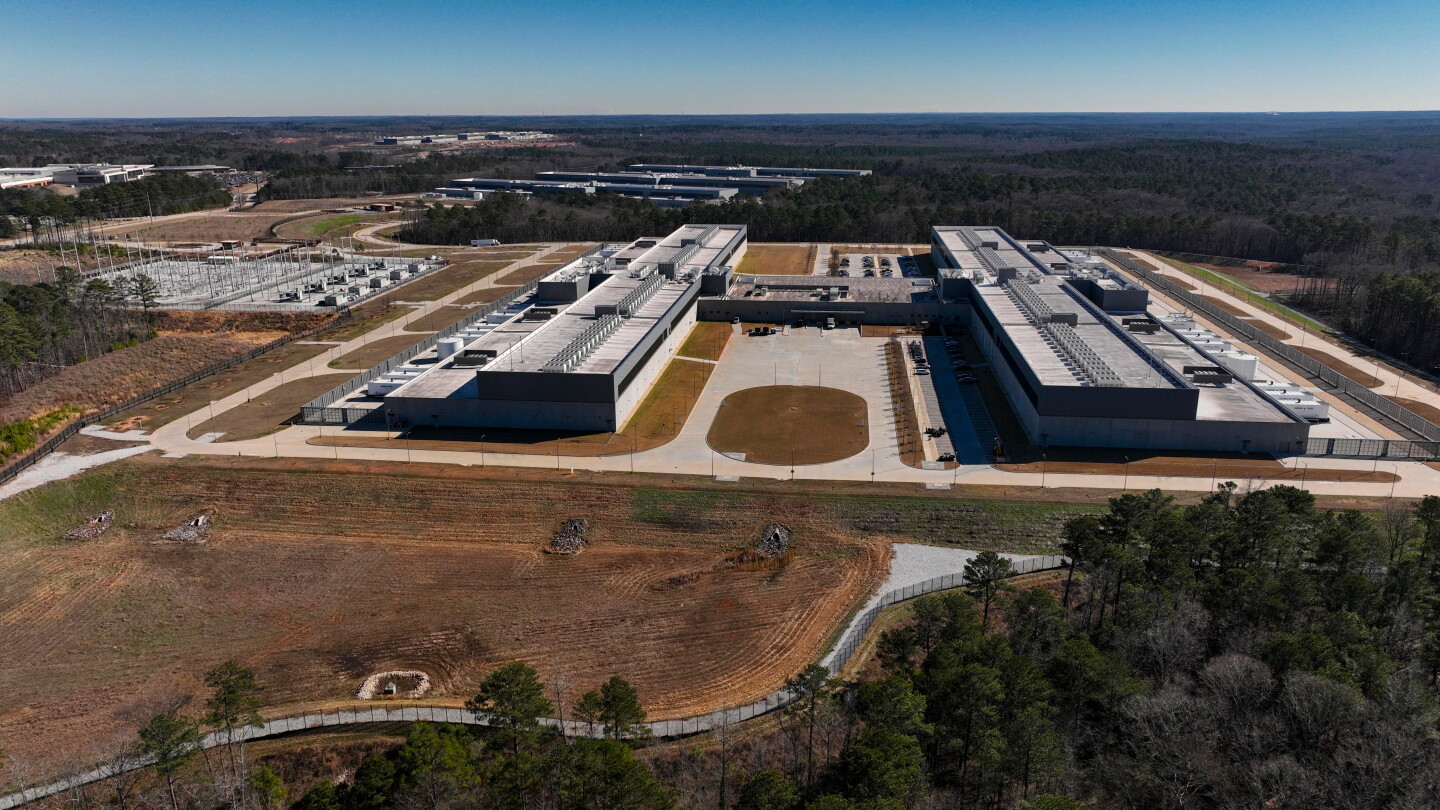
On Wednesday, June 17, 2026, the Santa Ana National Wildlife Refuge in Alamo, Texas posted a short notice on Facebook. The levee would be closed to bicycles and pedestrians for the rest of the summer. Bicyclists should use Bobcat Trail instead.
That was how people in the Rio Grande Valley learned that the border wall was finally coming to Santa Ana.
The refuge sits in Monica De La Cruz's district. She voted for the bill that made it possible, and when her constituents asked her to stop it, her office did not answer.
What is being built
A U.S. Customs and Border Protection map shows a nearly three-mile stretch labeled the "Rio Grande Valley 4 Project" cutting through the top of the refuge along Levee Road.
Scott Nicol, a longtime anti-wall activist in the Valley, described what that means on the ground:
"What's going to happen is they're going to carve away the river-facing (side) roughly one-third of that levee and replace that side of it with a concrete slab, so just a straight vertical wall that'll be around 10-feet tall. Then at what is now the top of the levee, they'll put steel posts that are 6-inches wide and spaced 4-inches apart, and that'll stand about 15 to 20 feet above that concrete wall … and so you get a total of 30 feet."
Thirty feet of concrete and steel bollards, with four inches between the posts.
"Because of the limited space between the posts and the concrete is impassable to most terrestrial animals, you know a bobcat or an ocelot, they can't get up that 10 feet and they can't get between those bollards, so it's going to be absolutely devastating for wildlife."
Santa Ana is 2,088 acres of subtropical woodland — one of the last remnants of the forest that used to line the Rio Grande. The Fish and Wildlife Service calls it "the jewel of the National Wildlife Refuge System," a premier birding destination with species found nowhere else in the country outside deep South Texas, and home to more than 300 kinds of butterflies. And when the river floods, the levee is how animals get to higher ground. A wall on the levee cuts that off.
Nicol says the project is part of a $1.14 billion contract to Spencer Construction that also covers La Lomita, the National Butterfly Center, Bentsen-Rio Grande Valley State Park, the Salineño Wildlife Preserve in Starr County and areas near La Grulla.
This had already been settled
Here is what makes this De La Cruz's story and not just Washington's.
During Trump's first term, activists in the Valley won this fight. Rep. Henry Cuellar, the Laredo Democrat, and the rest of the Rio Grande Valley delegation got the protection written into the annual homeland security spending bill, and the 2020 version runs to a single sentence:
"Federal funds may not be made available for the construction of fencing — (1) within the Santa Ana Wildlife Refuge; (2) within the Bentsen-Rio Grande Valley State Park; (3) within La Lomita Historical park; (4) within the National Butterfly Center; (5) within or east of the Vista del Mar Ranch tract of the Lower Rio Grande Valley National Wildlife Refuge; or (6) within historic cemeteries."
That sentence was never repealed. It was routed around.
It sits in the appropriations bills — the annual laws Congress passes to fund the government — and it governs the money those laws hand out. The One Big Beautiful Bill Act was not one of those. It put $46.5 billion into border barrier construction through the budget process instead, which is how the Department of Homeland Security was able to bypass the appropriations process and spend it in the protected areas anyway. A Customs and Border Protection spokesperson told the Texas Tribune the quiet part outright: funding received under the One Big Beautiful Bill "does not have any prohibited or excluded areas for border barrier construction."
Cuellar is now trying to put the same language into the 2027 spending bill. He does not expect it to arrive in time. "What they're doing, in my opinion, and I think we all know, is they're trying to beat the clock on this to say, 'Before that law comes in, we're going to go ahead and get it built,'" he said in July.
On July 3, 2025, Monica De La Cruz voted for that bill. Roll call 190 — she is recorded as "Aye."
She is the member of Congress for Santa Ana National Wildlife Refuge. The money now paying to wall it came out of a bill she voted for, in a form the protection cannot reach.
In February, her constituents asked her to fix it
This didn't happen quietly. In February 2026, more than 100 people rallied at the refuge to oppose the plans. What they wanted from De La Cruz was specific and small: back the restoration of the protective language in the ongoing congressional negotiations. Put it back the way it was.
Marisa Oliva, president of Friends of the Wildlife Corridor, warned that without action "we are going to leave the gates wide open" for the funding to reach Santa Ana.
Cuellar, who wrote the original protection, said of the administration: "They're trying to go around the language that I added."
De La Cruz's office did not respond to requests for comment.
Four months later, the levee closed and the contractors moved in.
"It could happen tomorrow"
When the levee closure was announced in June, Nicol called on De La Cruz, along with Senators John Cornyn and Ted Cruz — all three of whom voted for the bill — to intervene.
"They could push for this contract to be canceled or rewritten. It could happen tomorrow. I don't think they're going to do that, but I also don't think that just because they're in the same party as the president they should get a pass for that. Basically, they're deciding that they care more about fealty to Trump than they care about people in the Rio Grande Valley or the environment in the Rio Grande Valley."
That is the whole question in one paragraph. There is no procedural obstacle here. A member of the majority party, representing the district, asking her own party's administration to rewrite one contract in one place is about as easy a lift as exists in Congress.
She has not done it, and she has not explained why.
The Texas Observer asked her about the wall through Santa Ana in July. She did not respond to a request for comment.
Update, August 13: a water district stopped the wall. She didn't.
The work at Santa Ana is halted, and the refuge had nothing to do with it.
On July 30, 2026, a state district judge in Hidalgo County ordered Spencer Construction and its subcontractor to stop, after Hidalgo County Irrigation District No. 2 went to court saying the crews had trespassed on a 120-foot strip of land it owns around one of its irrigation canals and had "recklessly allowed large amounts of dirt to fall into" it. The federal government moved the case into federal court on August 12, and a magistrate judge extended the pause the next day, to August 27.
The district is not trying to save the refuge. It wants the wall moved 15 or 20 feet south so its crews can still reach the canal. At the hearing the government's own lawyer told the judge that a wall along Santa Ana was inevitable, and that Washington would take the land by eminent domain if it came to that.
So a water district worried about a maintenance road has done more to stop this than the member of Congress whose district it runs through.
The ocelot problem is not sentimental
Fewer than 100 ocelots are left in Texas. According to the Fish and Wildlife Service, they survive in two small, isolated breeding populations — on private ranch land and at Laguna Atascosa National Wildlife Refuge — and the federal plan for them turns on giving those populations somewhere to disperse to.
A 30-foot wall with four-inch gaps is a wall to an ocelot in exactly the way it is a wall to a person.
This is also happening at a moment when the federal government has stopped counting habitat destruction as harm at all. In July, the Interior and Commerce departments finalized a rule redefining "harm" under the Endangered Species Act so that wrecking the place an endangered animal lives no longer counts — only directly injuring the animal does. A study of species listed between 1975 and 2017 found that 81% were threatened by habitat loss and only 17% by direct killing.
So the wall goes up through the habitat, and the law that used to call that harm has been rewritten to say it isn't.
What her district gets
De La Cruz's constituents did not get a vote on this. They got a Facebook post about a closed bike path.
They also got the rest of the bill she voted for. In Texas's 15th District, the Joint Economic Committee's House Democrats estimate that 65,193 people will lose health insurance — 3,493 of them losing Medicaid under the bill, and 61,700 losing Affordable Care Act coverage as the enhanced premium tax credits lapse. 55,480 households in the district — about 21% of all households — rely on SNAP, which the same bill cut.
And a wildlife refuge that Congress had already agreed to protect is getting a 30-foot wall through the top of it, on her watch, with her vote.
Sources
The construction announcement and Scott Nicol's description of the project were reported by Francisco E. Jimenez for MyRGV.com / The Monitor: Border wall construction set to begin in Santa Ana National Wildlife Refuge (June 19, 2026). The February rally was reported by David Martin Davies for Texas Public Radio: New border wall plans threaten Rio Grande Valley nature areas, via Texas Standard (February 12, 2026). How the budget bill's money got around the appropriations riders, and Henry Cuellar's account of it, come from Berenice Garcia for The Texas Tribune: Historic Rio Grande Valley church saved from being cut off behind border wall (July 9, 2026) and Federal judge extends pause on border wall construction at South Texas wildlife refuge (August 13, 2026). The protective language is section 210 of the Consolidated Appropriations Act, 2020.