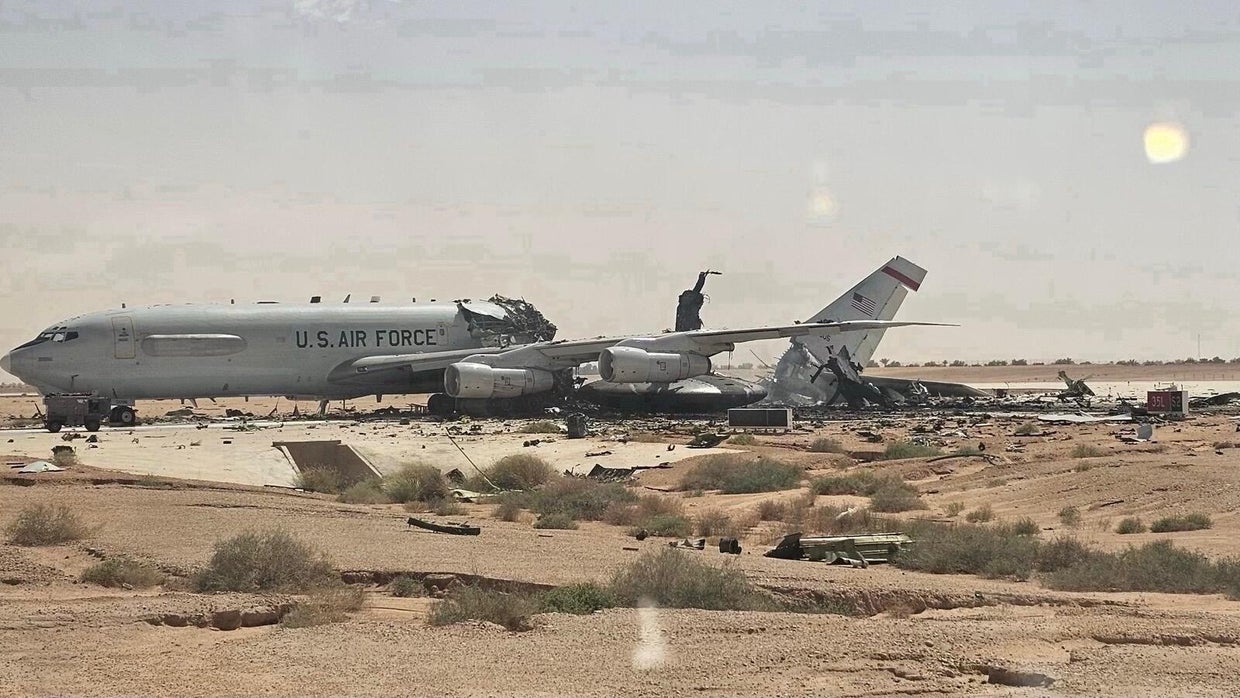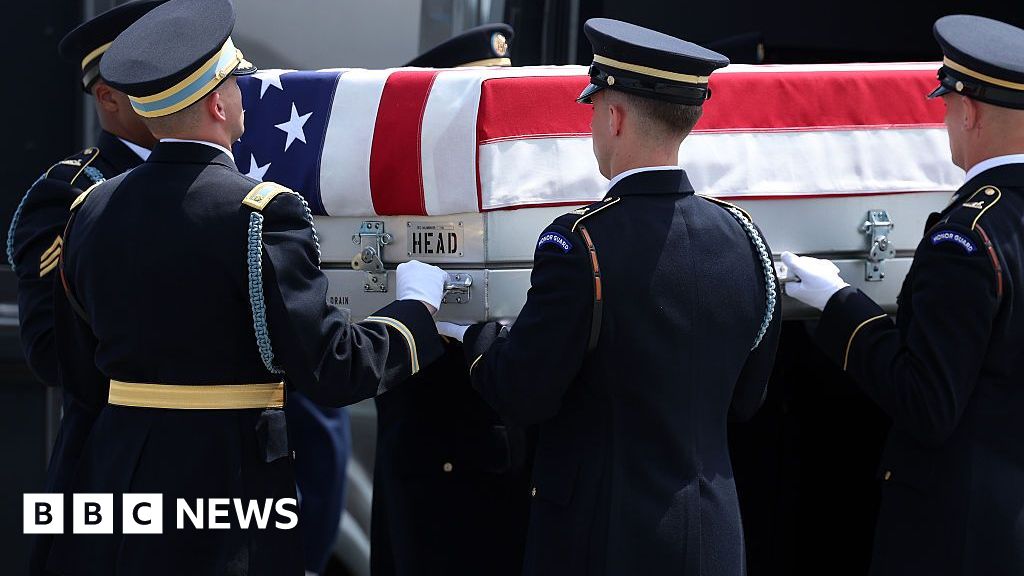
At least 624 American service members have been wounded since President Trump started the war with Iran in February. That's the Pentagon's own number, from its most recent update on July 25.
Six hundred and twenty-four. Every one of them is somebody's kid, somebody's parent, somebody's neighbor. And not one member of Congress ever cast a vote to send them there.
The number nobody was told about
Here's the part that should make you angry. This wasn't announced. There was no press conference, no briefing, no moment where the government looked the country in the eye and said "here is what this war has cost so far."
It just appeared in a database.
The Pentagon splits the total across two pages now: 417 wounded under "Operation Epic Fury" — the name for the initial attack on Iran — and another 207 under a category called "Overseas Operations." The BBC notes it's not even clear whether all 207 of those were hurt in the Iran war.
And the totals keep moving. Task & Purpose reported that the Pentagon's casualty database listed 420 troops injured in the conflict as of Friday — then 624 after the weekend update. More than 200 wounded Americans, added to the public record in one go. Of the 207 wounded since July 7, 182 are soldiers, 21 are from the Navy, and four are airmen.
Meanwhile the Epic Fury wounded count went the other direction. As late as Tuesday it read 482. Now it reads 417.
They did the same thing with the dead
If this feels familiar, it's because we wrote about it three days ago. The Pentagon's site said 18 U.S. troops had been killed in the Iran war. Then it said 14.
Four names didn't disappear, exactly. They were moved — off Operation Epic Fury and onto the brand-new "Overseas Operations" page, which the Pentagon says counts casualties "starting July 7th 2026." Those four are the only deaths listed there.
Who are they? Three soldiers killed when Iranian missiles hit a base in Jordan on July 17, and one killed in Iraq during a controlled detonation of an Iranian drone. They died in this war. They just died in the part of it that came after Trump declared the ceasefire was over — the part the administration would apparently rather file somewhere else.
According to the Associated Press, the "Overseas Operations" category showed up on the Pentagon's website for the first time on Sunday. It did not exist until after those four soldiers had died.
"An absurd ruse"
You don't have to take a critic's word for it. Take a general's.
"The administration seems to have a real hard time being honest about what is going on — not just about casualties, but about the whole war in general."
That's Lt. Gen. Ben Hodges, who commanded U.S. forces in Europe when Trump first came to power.
Republican Rep. Thomas Massie — a member of the president's own party — called splitting the conflict into separate categories an "absurd ruse" in a post on X.
And David Lapan, a Pentagon spokesman from 2000 to 2003 and again from 2009 to 2011, told Task & Purpose exactly why this matters: "In the absence of specific information from the department about these military operations, unfortunately, casualty reporting is one of the few ways that the public can judge how this war is going."
That's the whole point. Spread the count across two pages, invent a new category, and edit the numbers quietly over a weekend, and suddenly nobody outside the building can tell how bad this war has gotten.
The official explanation makes it worse
Pentagon spokesman Sean Parnell called the shifting numbers "temporary data disruptions" and said "these site anomalies are currently being resolved in coordination with the Military Services."
Site anomalies. That's the phrase the U.S. government chose for four dead Americans changing categories in the middle of a week.
And note what the president himself was saying while this was happening. On July 21, Trump posted on Truth Social that the "Iran Military Conflict" had claimed 18 lives. Days later the official page for that conflict said 14. The same week, defense officials indicated they were reclassifying the four because of the ceasefire Trump had declared — while a spokesman called it a data glitch. Nobody in charge has reconciled the two stories.
This is what "no vote" buys you
Every part of this traces back to one decision: Congress never authorized this war, and Republicans in Congress have fought to keep it that way.
- In the Senate on June 24, 13 Republican senators we track helped block a war powers resolution, 47–50, that would have ordered U.S. forces out of unauthorized hostilities with Iran — the day after the Senate had agreed, 50–48, to a House resolution telling the president the same thing.
- In the House on July 23, the chamber voted 214–208 to order forces out — its second such vote, after 215–208 on June 3 — and 185 Republicans we track voted no.
- When fighting restarted in July, House Republicans backed a legal theory that the ceasefire made this a "brand new" war, resetting Trump's War Powers clock so he'd never need Congress's permission at all.
That gimmick had an obvious appeal: if Congress never votes, no one in Congress ever has to answer for what the war does.
Now look at what it produced. Since mid-July, the U.S. traded fire with Iranian forces for 13 consecutive nights before the pause that started Friday. More than 200 additional wounded Americans then turned up in the official count over a single weekend — and the public found out from a database, not from anyone in charge. When the House voted again on July 23 to tell the president to bring troops home, 185 of the Republicans we track voted to keep the war going. And when the numbers got ugly, the administration reorganized the numbers instead of the strategy.
The rest of us are paying for it too, in ways that show up closer to home: gas and fuel prices climbed after the Iran war started, squeezing drivers, farmers, and families already stretched thin.
The bottom line
A war costs whatever it costs. What a country chooses is whether to tell the truth about it.
Six hundred and twenty-four wounded Americans. Eighteen dead, or fourteen, depending on which page you loaded and which day you loaded it. A brand-new casualty category that appeared only after four more soldiers had died. A spokesman calling all of it a website glitch. And Republicans in Congress who have made sure no vote with the force of law has ever put Congress's name on any of it.
Those service members didn't get to choose. They raised their hand and went where they were sent. The absolute least their country owes them is an honest count — and representatives willing to vote, on the record, on whether the war they're fighting should be fought at all.
We deserve better. So do they.
Source
- "More than 600 US military service members injured since Iran War began in February," by Brandon Drenon, BBC News, July 27, 2026.
- "Pentagon reveals hundreds of new Iran war casualties," Task & Purpose, July 26, 2026.