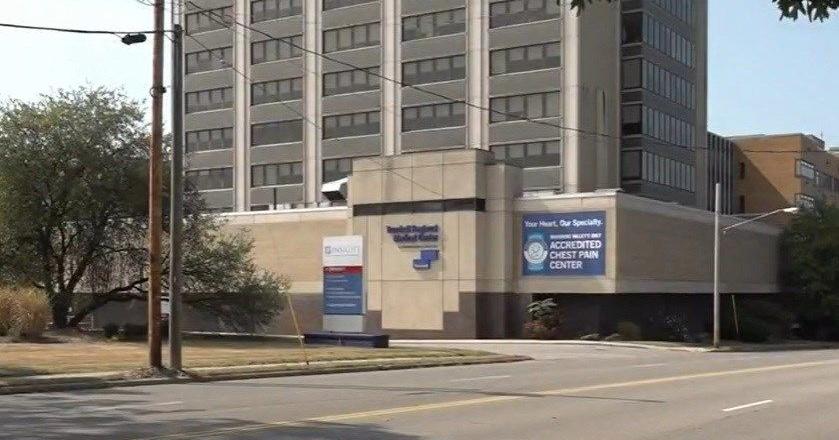
In March 2025, two hospitals in Trumbull County, Ohio shut their doors. Nearly 700 employees were furloughed. The county lost its only behavioral health provider.
Sixteen months later they are closed again. The main one, Trumbull Regional Medical Center in Warren, reopened for 43 days in the fall of 2025, shut down a second time, and has no license to operate and has lost its Medicare and Medicaid certification. Crews have been taking the signage down.
Trumbull County is in David Joyce's district. Asked about it in April 2026, Joyce said the closure "has been devastating," and said he is working to increase health care access in rural areas through appropriations and funding programs.
Here is what the record actually shows him doing about it.
One letter, in May 2025
On May 14, 2025 — about two months after the doors closed — Joyce joined Senator Jon Husted and Rep. Michael Rulli in a letter to Attorney General Pam Bondi asking the Justice Department to investigate "the legality of the events that led to the subsequent closures."
The letter asked DOJ to look at Steward Health Care's financial decisions, allegations of Medicaid and Medicare billing fraud, and the possible misuse of federal money. Steward is the bankrupt chain that owned the hospitals before Insight Health System bought them in October 2024. Insight closed both in March 2025, saying Steward never made payments it owed under the bankruptcy.
"If fraud or abuse played any part in this outcome, it is essential that those responsible be held accountable," the lawmakers wrote.
That was a reasonable thing to ask for. It is also the only action on this hospital that shows up in the public record under his name. Search the news coverage of the Trumbull closures — WFMJ, the Tribune Chronicle, the Vindicator, Ideastream, Business Journal Daily — and apart from that letter, the only place Joyce turns up is the written statement he sent 21 News eleven months later.
No hearing. No bill. Nothing new when the situation got worse — and it got much worse.
What happened after the letter
The hospitals were supposed to reopen that September. They didn't.
On September 23, 2025, the Ohio Department of Health inspected both facilities. They failed. Insight had planned to restart emergency services that month; the failed inspection pushed that off.
The Centers for Medicare & Medicaid Services also terminated its agreement with both facilities, citing failures in hospital governance, patient rights, discharge planning, and the federal law that requires emergency rooms to screen and treat anyone who walks in.
"We're disappointed Insight can't get it open, disappointed it didn't pass inspection," said Tom Connelly of AFSCME Ohio Council 8, which represents workers there. The nurses, he said, "want to get back to work."
They did, briefly. Insight received state permission to resume operations on October 14, 2025 and reopened the Trumbull hospital. Ohio Department of Health inspectors then found more building violations in a November 19 report, and gave the hospital 30 days to fix them or lose its license. Insight announced its second closure on November 26 — 43 days after reopening — blaming "regulatory hurdles and barriers" at the state agency. In January 2026 it surrendered its hospital license to the state altogether.
By April 2026, the Ohio Department of Health's own spokesperson could offer nothing: the department and Insight "have had some discussions on next steps, but there are no new developments to report at this time." Insight's statement was that it "is continuing to work on the Trumbull hospital licensing process."
An Ohio state representative, Nick Santucci, was already talking about the buildings as something other than hospitals. He said he is "optimistic about the potential to repurpose the facility" — "whether it's attracting new companies or building a different industry cluster."
Seven weeks after the letter, he voted to take $33 billion out of Ohio's Medicaid
Here is the part that matters most, and it is not complicated.
On July 3, 2025 — seven weeks after signing a letter demanding accountability for a hospital collapse in his district — Joyce voted for Trump's budget bill.
That law takes an estimated $33 billion in federal Medicaid money out of Ohio over the next decade. Analysts expect the state to respond by cutting what it pays doctors and hospitals, or by dropping optional benefits like dental, vision and prescription coverage. Rural hospitals are disproportionately dependent on Medicaid to stay afloat, and eleven Ohio hospitals appear on a list of those at risk of closing that Senate Democrats compiled from University of North Carolina research. As many as 356,000 Ohioans are projected to lose health coverage under it.
Medicaid is how a lot of hospitals in places like Trumbull County stay open. When you cut it, hospitals close. That isn't a prediction — it's the thing Joyce says he finds devastating when it happens in Warren.
So when he says he is working on rural health care "through appropriations," it's worth being precise about what he actually appropriated. The one thing he names is a piece of the same law. He told 21 News he was "happy to support the establishment of a new $50 billion fund for rural hospitals nationwide, including $202 million directed to Ohio." Republicans did add that fund to the bill, under pressure from hospitals. Half of it is split evenly among all fifty states, the rest is handed out at the discretion of the Medicare and Medicaid administrator, and providers can take no more than 15% of whatever a state receives. Set against a $990 billion Medicaid cut, Georgetown's Adam Searing told Signal Ohio, "it is, in no way, a way to make up for the full amount of those cuts."
He sits on the House Appropriations Committee, which decides where federal money goes. The single biggest health care vote of his term moved $33 billion out of Ohio, and he cast it for.
This is a pattern we keep running into. Shelley Moore Capito voted for the same bill and then cosponsored legislation to prevent rural hospital closures. Cindy Hyde-Smith told Mississippi "Medicaid is not going anywhere," voted to cut it, and started writing rural hospital rescue bills. The vote does the damage. The press release does the cleanup.
The people still fighting for it aren't in Congress
On Saturday, August 1, 2026 — nearly a year and a half after the closure — people in Trumbull County were still holding events to try to get the hospital reopened. The groups doing it were Good Trouble Trumbull, AFSCME Ohio Council 8, and the Mahoning County Solidarity Alliance.
"It's just not a good situation for the community. We needed this hospital," Connelly said.
"I was born in this hospital; it's where my brothers and sisters were," said Patricia Dunbar, an organizer with Good Trouble Trumbull.
The closure left the Warren area with one hospital.
Joyce is not mentioned in the coverage of that event.
What accountability would have looked like
Joyce has been in Congress since 2013. He is a senior member of the committee that writes federal spending bills. He had real tools here. He could have pushed his own committee to attach conditions to federal money flowing to hospital owners like Steward and Insight. He could have demanded a hearing on what private equity ownership did to a bankrupt hospital chain that took federal dollars and left two Ohio communities without care. He could have voted against a law that pulls tens of billions of Medicaid dollars out of his state.
He sent a letter to the Attorney General, and then he voted for the cuts.
Sixteen months later, the emergency room is dark again, the signs are coming off the building, and the people trying to bring it back are union members and neighbors organizing on their own time — the same thing that happened in his district when constituents got tired of waiting for a town hall and held their own.
"Devastating" is the right word for it. It just isn't an action.
Source
Insight in talks about reopening the Trumbull County hospital — WFMJ, April 21, 2026.