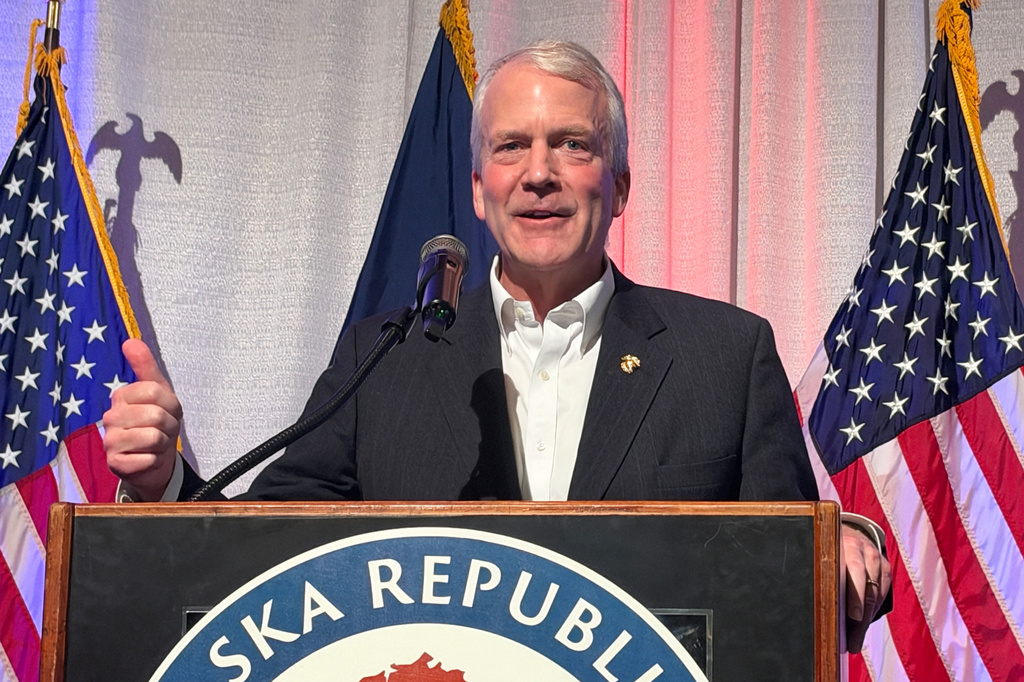
Dan Sullivan lost his reelection race this month. The law he helped pass is staying.
This fall, about 775 Alaskans lost their Medicaid coverage. Most of them are children. They are refugees, asylum seekers and people with temporary protected status from places like Ukraine — in the country legally. They lost their health coverage because of a provision in Trump's budget bill that cuts off Medicaid for many non-citizens.
Sullivan voted for that bill. He didn't just vote for it — he took credit for shaping it.
What happened in Juneau
On November 10, Alaska's Deputy Health Commissioner Emily Ricci briefed state lawmakers at a joint legislative hearing on what the budget bill is doing to the state's health programs, as The Alaska Current reported.
The news was bad:
- About 775 Alaskans have already lost Medicaid because of their immigration status. Most are kids.
- The state is still trying to figure out whether it can offer any federally funded help to the pregnant women and children in that group. Ricci told lawmakers the options are limited.
- People without coverage can still go to the emergency room. But when they can't pay, that unpaid care pushes up costs for everyone else in Alaska's health system.
Those 775 people are only the start. The same law moves about 40,000 of Alaska's 200,000 Medicaid enrollees from yearly check-ins to check-ins every six months. That's more paperwork for families and more work for state workers who are already swamped. "More work for everyone, more work for the person who is applying," Ricci said.
The law also adds Medicaid work requirements, due to start January 1, 2027 — or January 1, 2028, if a delay the state has requested is approved. About 13,000 Alaskans on Medicaid will have to prove they're working or that they qualify for an exemption. Ricci told lawmakers there will be very few coverage options for anyone who loses Medicaid that way — they can't get subsidies to buy private insurance either.
A report prepared for the Alaska Department of Health earlier this year found that more than 9,000 Alaskans could lose Medicaid because of those work rules.
What Sullivan promised
On July 1, 2025, the day he voted to pass the bill, Sullivan put out a press release with a headline saying he had "shaped" it to "Strengthen Health Care."
In that release, he said the bill would:
strengthen Alaska's health care and nutrition programs, protect Alaska's most vulnerable communities
And he went further:
"I think it is safe to say, no state fared better from this bill."
Refugee children who just lost their doctor are about as vulnerable as a community gets. The bill didn't protect them. It removed them from the program.
He was warned, and downplayed it
This isn't a surprise side effect that nobody saw coming. Sullivan tried to rebrand the bill to Alaskans as the "Working Families Tax Cuts Act."
When state lawmakers pressed him on what the bill would do to Alaska's already-expensive health care system during his annual address to the Legislature in February, Sullivan shrugged it off:
"This is not going to be a panacea that solves everything."
It wasn't a panacea. For 775 Alaskans, it was the end of their health coverage.
The timing also matters. As the Current notes, the bill put off most of its harshest cuts to Medicaid and food stamps until close to or after this year's election. Voters went to the polls before most of the damage landed. Now that the votes are counted, state lawmakers are the ones left to deal with it.
Alaska pays the bill
The budget bill was sold as cutting government. In Alaska, it's doing the opposite.
Ricci told lawmakers the extra six-month renewals will hit throughout 2027 and will likely mean hiring and training more eligibility workers. Checking whether people are really working or volunteering takes time, she said, and the federal government still hasn't clearly spelled out what paperwork it wants.
"We're going to have to increase the number of employees. We're going to have to do more work where, as before, we didn't," said state Rep. Andrew Gray, D-Anchorage. "This is a big government bill that's growing the government for no good reason."
Food stamps are next. Because Alaska's food stamp error rate is 23%, the law would eventually make the state pay more than $30 million a year. Thanks to a deal the delegation cut, Alaska got an extra year to bring that rate down before the bill comes due. That's a delay, not a fix.
Not the first time he didn't listen
Alaskans have tried to get Sullivan's attention on Medicaid before. One caregiver made three trips to ask him about it, and he sent a staffer who doodled.
And Alaska's families aren't alone. A separate Trump rule now counts Medicaid, CHIP and food stamps against green card applications, and the government's own analysis expects the savings to come from mixed-status families dropping off. Together, these changes are pushing legal immigrant families — and their kids — out of health care.
The bottom line
Dan Sullivan voted for Trump's budget bill and said it would "strengthen Alaska's health care" and "protect Alaska's most vulnerable communities." This fall it took Medicaid away from about 775 legal immigrants in Alaska, most of them children, and the state says it has few ways to help them. The same law will put about 40,000 more Alaskans on twice-a-year renewals and make about 13,000 prove they're working to keep their coverage.
Source
Dan Sullivan is leaving Alaska with a healthcare nightmare — The Alaska Current


